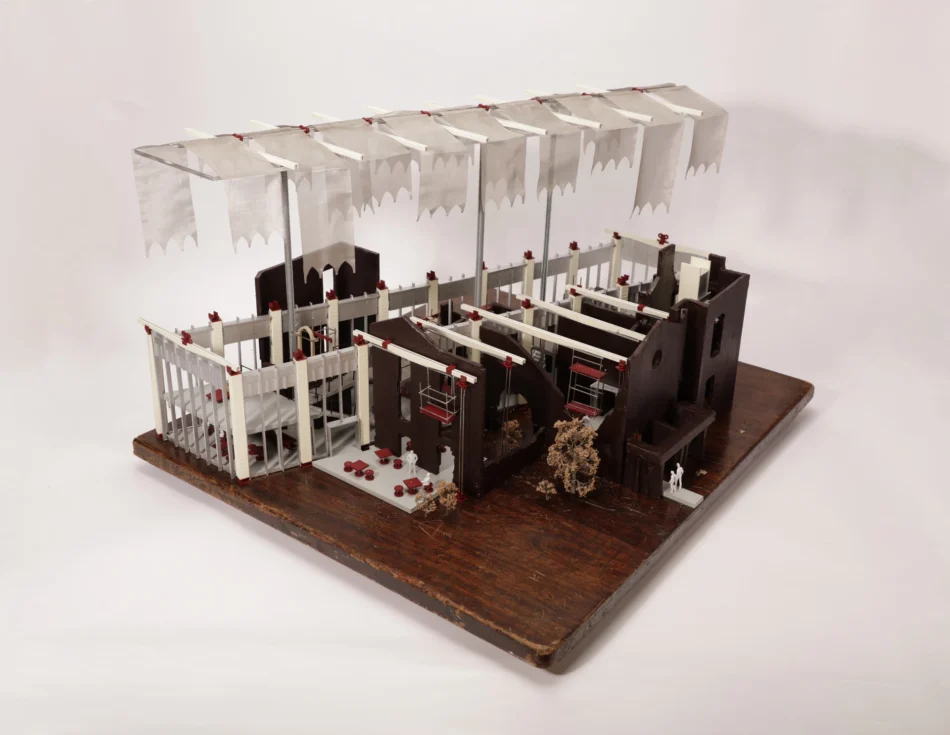
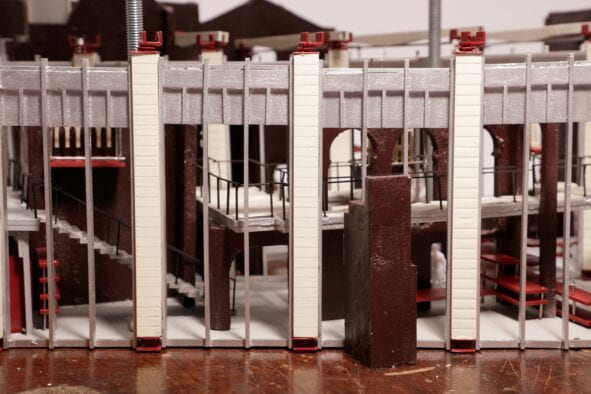
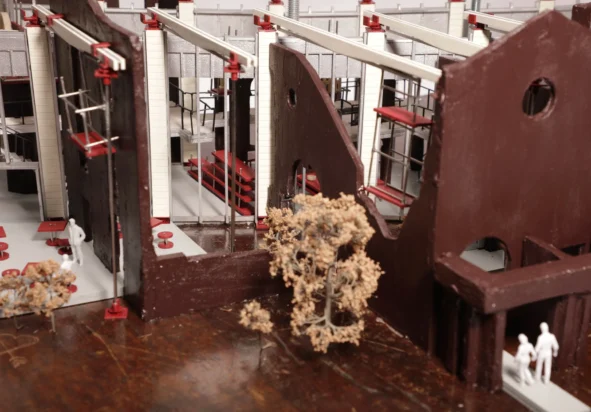
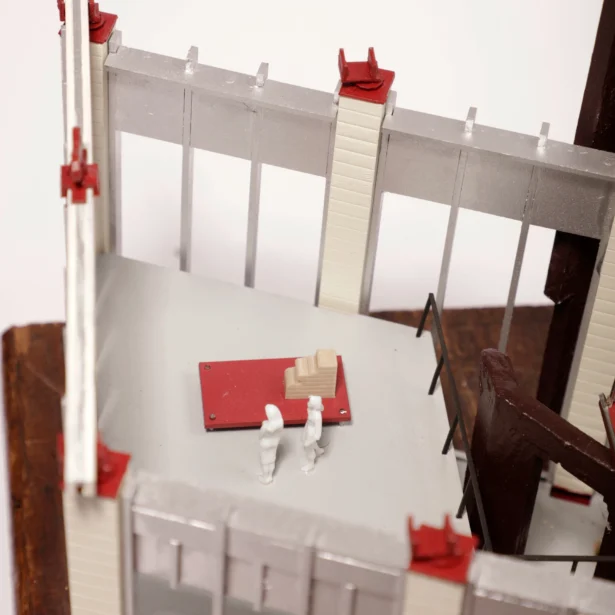
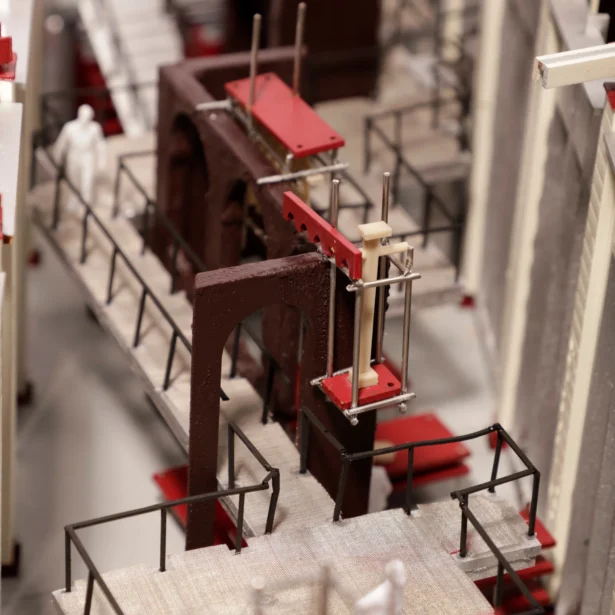
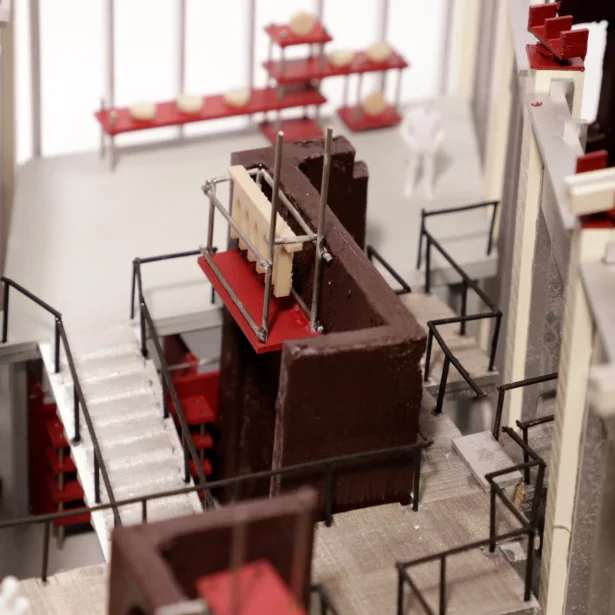
Nettleham Hall & Lincoln Cathedral; two structures built from the limestone seam they are sat on, both in varying states of collapse. My approach is to form a workshop for the cathedrals full time masonry team, a workshop in which the public can appreciate their craft, and see the innovations which make Lincoln Cathedral so significant.
On the other hand, Nettleham Hall, our chosen site, is significant because of its ruination. Were it complete, it is not extraordinary, but in decay we can appreciate its structure and materiality at its most raw.
Orientation & Program:
The angle taken through Nettleham Hall highlights the orientation of its view to the Cathedral. Through selective demolition, advancing its ruination can offer new proximity to material and structural innovations. It allows a new frame to experiment with masonry in isolation, a showcase of this historical craft, and a testbed for its place in the future of building.
Materiality:
Leveraging a modular scaffold system for display and repair, for structure & furnishing, the site is furnished in the language of Cathedral masons, in an adaptive and removable manner. This sits alongside innovations such as post-tensioned limestone to offer a sympathetic and low carbon structural material, with centuries of inherent learning.
Gothic As Precedent:
With Lincoln Cathedral as the apex, Gothic masons presented an unimaginable alternative for interior space. They embraced verticality, lightness, detail and the idiosyncrasy of the individual to divine impact. The Cathedral works presents a weightless interior space with vertical emphasis which can be manipulated and altered by the individual craftsman.