The Gables: Intermediate Housing and Support Facility for Previously Incarcerated Mothers
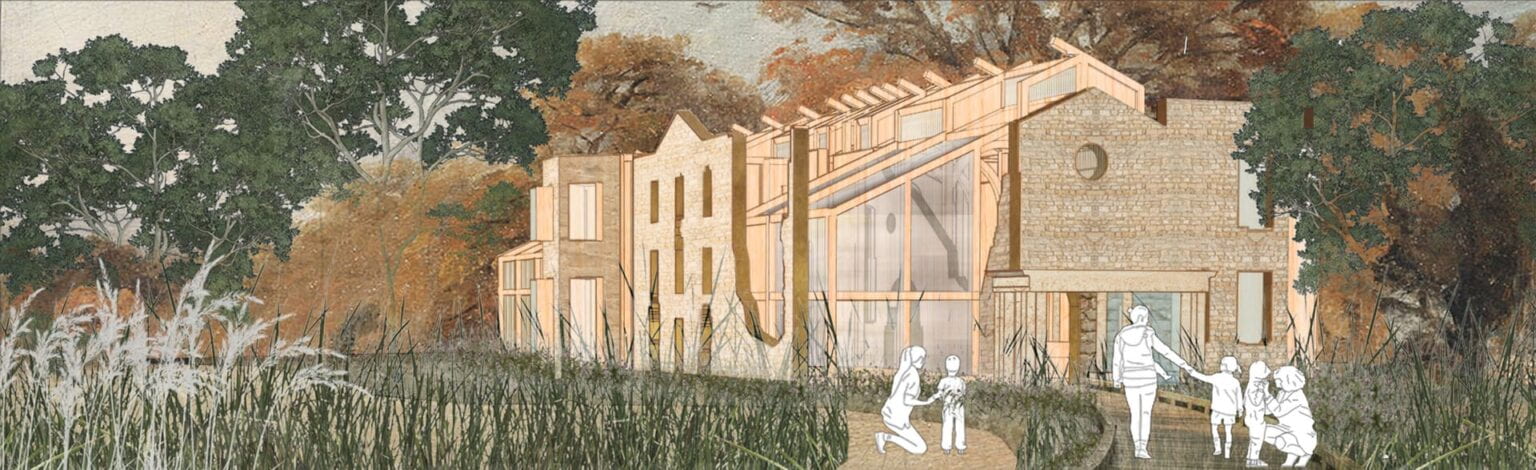
The Gables is an intermediate residential facility for mothers leaving prison. Set in the ruin of Nettleham Hall, Lincoln, the facility responds to the previous use of the site: a home. The ruin previously housed the Hood family and their staff, with spatial variations that reflected both walks of life. My adaptation of the ruin reimagines the site as an egalitarian home to allow for reintegration into everyday life.
The project aims to support mothers with the necessary skills and information to find permanent housing, financial security, and mental health management while helping to gently re-integrate into everyday life outside of prison. Mothers and their children are reunited in the facility after what can be years of incarceration and are supported in their relationship before leaving. The project accommodates mental, physical and social stimulation for mothers and children alike, with opportunities to relax, play and regain a sense of self.
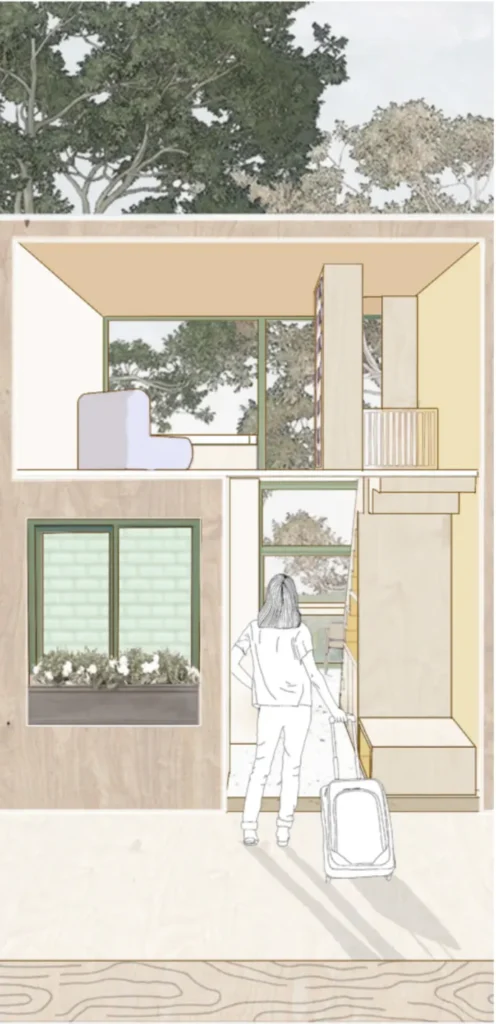
In the scheme, everything a mother could need is immediately available. Each family (one mother and up to three children) is allocated a private apartment and access to counselling and therapy, a shared kitchen and lounge, physical and mental health support, legal and accommodation advice, an on-site laundry, access to the old Nettleham Hall grounds, a children’s play atrium, a classroom and plenty of space to relax and socialise.
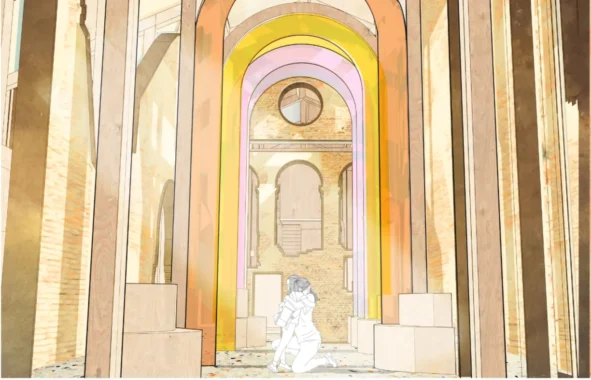
When exploring the site of the Nettleham Hall ruin, the space was immediately characterised by its distinct and varied apertures that served as intimations of the building’s previous life. The new timber and bio-polycarbonate spine that runs through the ruin to create The Gables supports the apertures within the ruin, as well as the women and children utilising the space. Using exposed joinery and keeping the space semi-transparent translates as a feeling of honesty throughout the space, in order to juxtapose the secretive and imposing establishments that many of the prospective users of the space will have come from. At the heart of the facility is the ‘reunion hall’. The reunion hall serves as the focal point of the scheme, and the experience of the users, so other services and spaces available for use stem from this centre point to allow the users to make the most of their special reunion moment. The setting of the ruin in the sprawling Lincolnshire countryside also informed the design. The new structure mainly comprises raw birch-faced plywood, an approachable and neutral material that both compliments and offsets the landscape to allow the women and children using the site to reconnect with nature and ecologies on a tactile level. A large section of the original Nettleham Hall grounds is allocated as a new public nature reserve to sit alongside the facility. By integrating public grounds into the scheme, the women and children using the space can feel included in everyday life outside of prison and are not isolated as prisons are. Lincolnshire Police HQ is also a 3-minute drive from the site, meaning that women due to using the site can be quickly resettled after leaving prison and the incarceration system. The facility serves as a satellite site for the Lincolnshire Police Headquarters.
I feel that this project highlights a huge disparity experienced by mothers in the UK prison system, where the needs of men are prioritised. Women make up just 3.8% of the UK prison population, meaning that mothers especially are forgotten where support is offered after incarceration. The unseen burden of incarcerated mothers and their families is particularly troubling; just 9% of children whose mothers are jailed are cared for by their fathers, meaning that the financial, social and mental burden of childcare is often left to the family of the mother. Only 5% of children with incarcerated mothers go on to live with their families after their mother has been sentenced, whereas the other 95% of children go directly into care or foster homes. The Gables aim to reunite mothers with their children and to set these families up for a life together outside of prison.