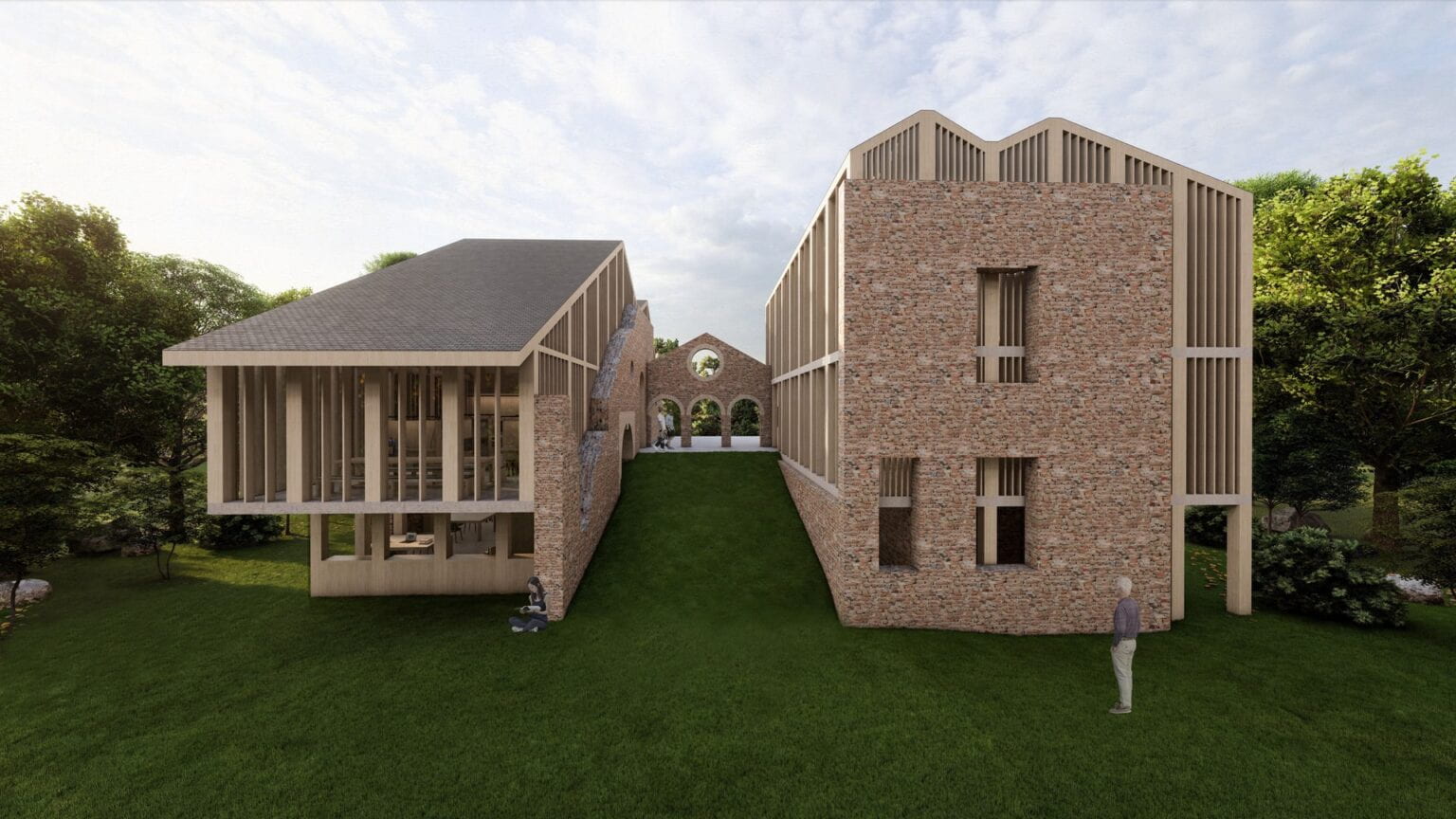
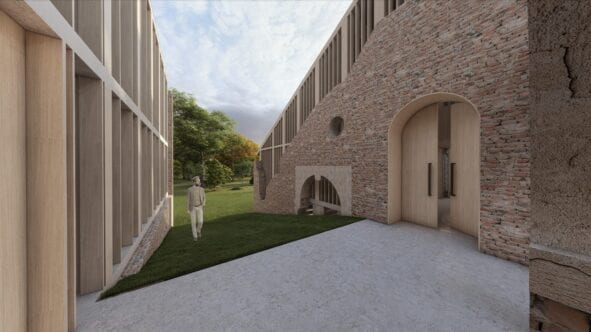
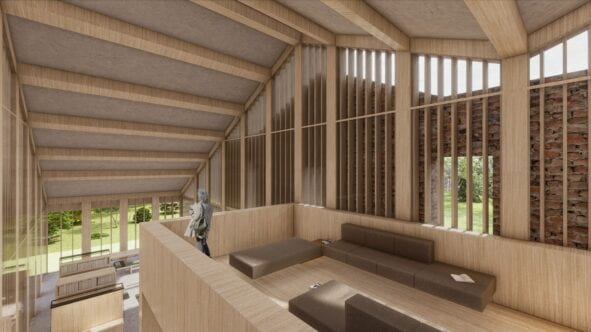
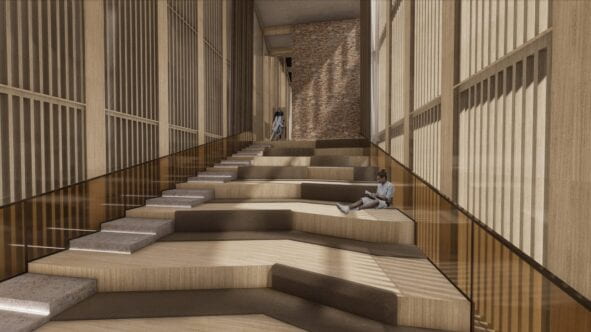
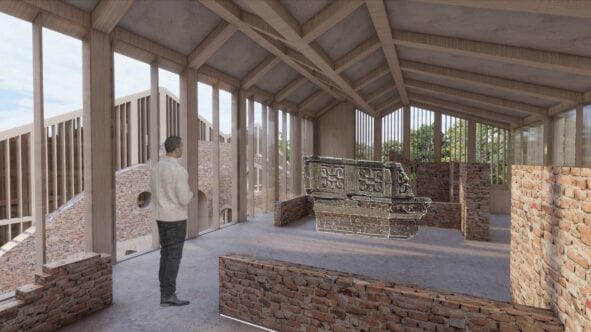
LOST HOUSE intends to contribute to the discourse on adaptive reuse by showcasing the potential of reprogramming existing buildings. The program is centred around the journey through the landscape that culminates on the hill leading to what used to be the main wall of Nettleham Hall. From there the site is divided into two parts: ARCHIVE and SALVAGE GALLERY. Both spaces allow visitors to experience the history of demolition, leading to a greater understanding of its scope and implications, as well as potential scenarios for the future of the existing building stock.
During my BA degree in History, I wrote a final dissertation on the subject of the destruction of country estates in England. Approximately 2000 stately homes vanished during the 20th century, with the rate of destruction reaching 1 house every five days in the 1950s.
In a way, Nettleham Hall is fortunate to come back from oblivion, gaining a new program, a new life. So many houses were not as lucky, and I would like to preserve parts of them in a temporary archive, contributing to the discourse on demolition, preservation and reuse.
The salvaged pieces would be temporarily exhibited in indoor gallery spaces before making their way into the landscape to continue their decay, serving as a reminder of history and potential being lost.
All the information about the houses and the pieces would be preserved in a public archive.